
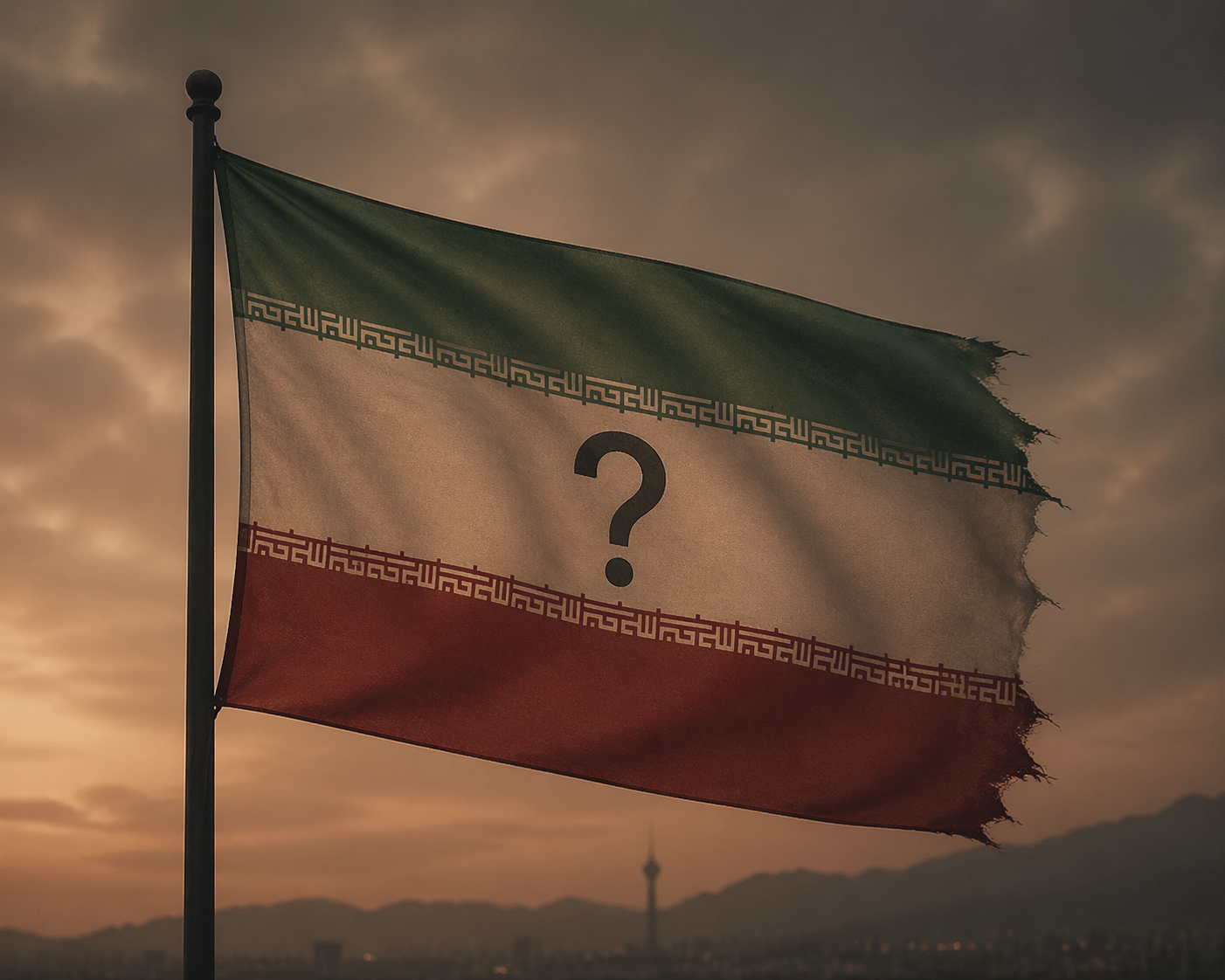
A common question since the United States military got involved in the recent war in Iran is with regard to what interest the United States has in engaging to the extent that it has.
This legitimate question demands background knowledge that many do not have in order to be answered intuitively. Due to the increasingly lacking ability and will of individuals to perform in-depth research on topics due to overstimulation from short-form content and the collective normalization of using such content as primary educational material, many seem to have come to the strict and often times stubborn conclusion that there is no domestic interest in entering this war without feeling the need to fully analyze the situation at hand or the geopolitical circumstances from which this conflict stems.
Equally consequential is the lack of a comprehensive and easily digestible explanation from those of influence that are equipped to supply said explanation. It is apparent many have immediately stopped their search after it was not presented to them in one of their many TikTok sessions.
For this reason, I, although I am not of influence but am equipped to answer, have chosen to create this article explaining many reasons, but not all, that sufficiently justify these actions from various angles of concern.
Iran attempted to supply Venezuela with missiles capable of hitting the United States.
In 2020 Venezuelan president Nicolás Maduro made an attempt to purchase a 400 million dollar ballistic missile system from Iran. The missile system was said to have had the ability to reach Houston, Texas, or as far as Washington, D.C. Ultimately, the deal did not come to fruition because of pressure from the United States government and statements made that any such shipment would be intercepted.
While their exact intent was not explicitly stated by Iran or Venezuela, such long-range missiles can only have one purpose that we can reasonably infer. If this shipment had been delivered and Venezuela managed to launch a large-scale surprise attack, although we have continuously running missile detection systems such as space-based infrared satellites (SBIRS) that can detect rocket plumes from anywhere in the world within seconds and ground-based radars that can detect the missile's trajectory shortly afterward, it is very possible that in this circumstance, although many or all the missiles could be shot down, some or many could land and kill thousands of American civilians.
This shows at the very least that Iran has a complete disregard for Americans and is willing to supply weaponry that would be used to harm American civilians and military personnel. This in and of itself shows a clear interest in such a regime's removal or destruction that would make it incapable of aiding in such an action. It does not, however, inherently show that the regime has any will to do such a thing for any reason other than for financial gain, which brings us to our next point:
America given nickname “Great Satan," and "Death to America" chanted.
Since the disastrous 1979 Islamic revolution in Iran, its leaders have made the hatred of the United States a core tenet to the regime's ideology. Famously, Ayatollah Ruhollah Khomeini, founder of the Islamic Republic, labeled the United States as “The Great Satan” (Sheytan-e Bozorg in Farsi). Ayatollah Ali Khamenei, who luckily recently became the former supreme leader of Iran after his death, called for the death of America on many occasions throughout his reign.
This proves that the United States has been declared the supreme enemy of Iran and clearly gives justification to the previous assertion that Iran would love for the Venezuelan ballistic missile shipment they were willing to supply to be used against the United States, but what does that mean in effect? Are the American people and the American government seen, respectively, as two separate entities deserving of separate treatment because of their supposed crimes that, in their eyes, have justified the label “The Great Satan"? For many that are of the position that the United States government is not the great Satan, this is already enough to justify the war in Iran, but for some that perhaps have disagreements with regard to American involvement in Middle Eastern conflicts and thus see some legitimacy in such a description of the American government, this may not yet be fully convincing. While the specific concerns of these individuals about involvement in Middle Eastern conflicts other than the current Iran war are outside of the scope of this article and thus will not be addressed, the historical precedent of Iran's differentiation of civilian and government targeting will be covered, which conversely will be of concern to such individuals, seeing that even being Iran's lover in the wrong geographical location at the wrong time can very well be a death sentence. Which brings us to our next point:
Iran's indiscriminate targeting of civilians historically
Throughout Iran's current regime's history, countless civilians have been killed by both it and its proxies.
Being the number one sponsor of terrorism, Iran has found quite a bit of blood on its hands, both American, Arab, and Jewish.
A few of these actions include but are not limited to:
1983 Beirut bombings:
Bombing of an American embassy killing 63 people, 17 of whom were American.
Truck bombing of Marines Barracks, killing 241 American service members and separately bombing and killing 58 French paratroopers. (One can discount these because they were military targets, but it is nevertheless worth keeping in mind.)
1994 Argentine Israelite Mutual Association bombing:
A massive bombing that destroyed a Jewish community center in Buenos Aires, Argentina, killing 85 civilians and injuring hundreds.
And more recently, the October 7th attacks on Israel:
1200 people killed (mostly civilians), amongst them families, festival attendees, and foreign nationals
Mass murder, rape, and torture
over 250 hostages kidnapped and subjected to harsh treatment
Iran not only finances Hamas, the organization that directly carried out this attack, but also assisted in planning and coordinating this attack directly.
But let's disregard for now atrocities carried out by Iranian proxies such as Hezbollah, Hamas, the Houthis, or Boko Haram. Let's see how Iran conducts itself in wars it is directly involved in against enemies it has the capacity to harm.
In the Iran-Iraq War spanning from 1980 to 1988, between 500 thousand and 1 million civilians and soldiers were killed. Not to discount Iraq's barbarism under Saddam Hussein, Iran also acted extremely savagely. Iran used tens of thousands of child soldiers, some as young as 9 years old, to walk through minefields to clear the way for adult soldiers to attack fortified Iraqi areas. Specifically during an offensive named “Operation Ramadan," 10,000-20,000 of these soldiers were killed because of this barbaric tactic. This shows a clear disregard not only for their own people but also for their own children, whom no one in their right mind can discount as military deaths regardless of their use as such.
Now, in the Iran-Iraq War, Iraq was clearly far more inhumane than Iran with their use of chemical weapons on Iranians and Kurds, so one could argue that desperate times call for desperate measures. But regardless of the situation, it is pretty hard to actually legitimize such actions when looking completely objectively without an agenda that predisposes you to rationalize the use of child soldiers en masse. For this reason, in conjunction with the precedent set by their proxies, we can most definitely conclude that Iran is very much willing to omit any distinction between military and civilian targets in order to achieve any objective, be it ideological or for defense purposes.
Now one may ask, Iran clearly hates the United States; they have made attempts, both direct and indirect, to destroy it, and if they could, they would and they would not try to abide by any ethical code you and I may hold, but they seemingly have no ability to do so. The ballistic missile shipment was never sent, and all the other things mentioned were isolated to the Middle East. Why should an American be in favor of such a war if Iran is not an imminent threat? This leads us to our next point:
Iran's Nuclear Program
Before the recent strikes on Iran's nuclear program, Iran had a hefty stockpile of close to weapons-grade uranium. This meant that Iran would have had a very short amount of time needed in order to purify uranium that could be used to create a nuclear bomb. Iran having a nuclear bomb is dangerous for many reasons. Primarily, and also most imminent of a threat is the leverage that it gives Iran. In the short term Iran is unlikely to be able to create an intercontinental missile that could reach the United States, but such a missile could be used or could be threatened to be used against US military bases or allied countries in the Middle East, although an intercontinental missile is still possible within a longer time frame. This new power dynamic would make it much harder to fight against or subdue actions done by Iranian proxies leading to societal instability and instability in energy prices affecting the world economy.
Additionally, nuclear weapons could be given or sold to other Iran allies like Venezuela, which even without long-range missiles would be an extreme direct threat to the United States. Recall the previously mentioned attempt to sell ballistic missiles to Venezuela.
Conclusion: Inaction Is Not an Option
The benefit the United States receives is not isolated to the above-stated reasons. There are many other factors, economical and hegemonic in nature, that are equally important and have enormous implications on the quality of life of Americans and their prosperity. The points covered in this article are some of the national security threats Iran posed both before the war and those that are ongoing. The points made and the information provided serve as the minimum level of knowledge needed to have a somewhat informed understanding of the situation at hand and can provide clarity to some extent on the rationale behind the president and his government's actions, which certain people may find confusing.